

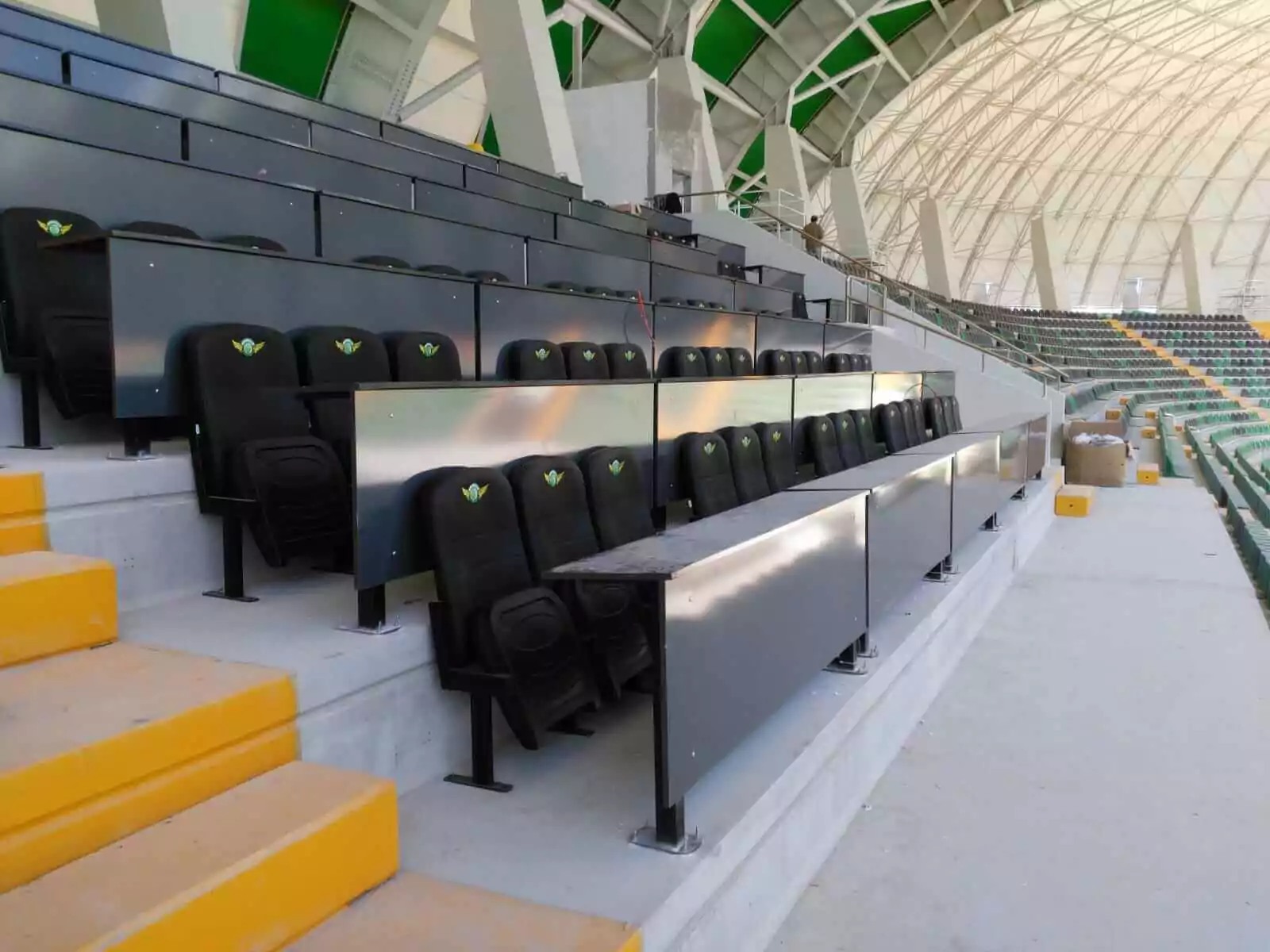
Stadium Seating Manufacturer Europe
Tribunes Built to Last
Stadium seating is one of the most important parts of a sports venue. It affects how the tribunes look, how spectators move, how capacity is planned, how easily the venue is cleaned and how the stadium performs after years of use. A stadium may have strong architecture, modern lighting, a professional pitch and impressive roof systems, but if the seating is weak, faded, loose or poorly installed, the whole venue can lose its professional appearance.
A professional stadium seating manufacturer must understand that stadium seats are not simple plastic products. They are part of the spectator experience, the venue identity and the long-term maintenance plan. Outdoor seats must resist sunlight, rain, dust, temperature changes and heavy public use. Covered stands may need folding or more comfortable solutions. VIP areas need a higher level of finish. Press tribunes need working seats and desks. Team areas need player bench seating and shelter systems.
The right stadium seating solution should be selected according to the venue type, climate, usage intensity, mounting surface, row spacing, step depth, color plan, numbering system and long-term maintenance expectation. A low-cost seat may seem attractive at first, but if it fades, cracks, loosens or requires early replacement, the real project cost becomes much higher.
Stadium Seating Manufacturer for Professional Venues
A stadium seating manufacturer should provide more than products. The manufacturer should help project teams evaluate different seating categories, technical details, material requirements and installation conditions. Public stands, VIP zones, hospitality areas, press tribunes and player benches all require different solutions.
In large stadium projects, consistency is critical. Thousands of seats may be installed across the venue. Color tone, plastic form, mounting alignment, seat numbering and row layout must remain clean and organized. If one section looks different from another, the entire tribune can appear less professional.
A manufacturer-based approach helps control product quality, material selection, UV resistance, color planning, mounting details and project-specific options. This is especially important for international stadium projects where delivery timing, packaging, phased installation and technical coordination matter.
Stadium Seating for Europe
European stadium projects often require durable materials, clean design, technical clarity and reliable supply. Football clubs, municipalities, schools, arenas and sports facility developers need seating that can perform well for years while keeping the venue visually organized.
For European projects, regional production and supply can create practical advantages. Delivery planning can be easier, communication can be more direct and renovation schedules can be coordinated more smoothly. This is especially valuable when a stadium needs to replace existing seating within a limited installation period.
A professional stadium seating manufacturer for Europe should understand public venue requirements, weather exposure, UV resistance, easy cleaning and long-term price-performance balance. The aim is not only to install seats, but to protect the venue’s value over time.
Fixed Stadium Seating
Fixed stadium seating is widely used in public tribunes, football stadiums, school sports facilities, municipal venues and training grounds. These seats are mounted directly to the tribune surface and provide a clear individual place for each spectator.
The main advantage of fixed stadium seats is their simple and durable structure. Since they do not include a folding mechanism, they can be practical for high-traffic public stands and outdoor areas. Maintenance needs can be lower compared with moving systems.
However, fixed stadium seating still requires strong material quality. The seat body, mounting points, plastic thickness, UV additives and surface form all affect long-term performance. A well-designed fixed seat can protect capacity while giving the tribune a clean and organized appearance.
Monoblock Stadium Seating
Monoblock stadium seating is a practical solution for many sports venues. The single-piece plastic form supports efficient installation, simple maintenance and strong visual order. It is commonly used in public stands, municipal stadiums, school fields and renovation projects.
A monoblock stadium seat should be strong enough for frequent spectator movement, outdoor exposure and regular cleaning. The seat shape should provide basic comfort without using unnecessary space. This helps protect the total capacity of the tribune.
Material quality is essential. Poor plastic can fade, crack or become brittle under sunlight. A strong monoblock seat should combine UV resistance, color stability, mechanical strength and easy cleaning.
Plastic Stadium Seating
Plastic stadium seating is one of the most common solutions for sports venues because it is durable, cleanable and suitable for large quantities. Plastic seats can be produced in different colors and arranged to create club patterns, section zoning or a unified stadium identity.
The real performance of plastic stadium seats depends on raw material quality, additives and production consistency. Outdoor plastic seats must resist sunlight, rain, dust, temperature changes and cleaning chemicals. UV resistance is especially important in open-air stadiums.
A plastic stadium seat should not be selected only by color or shape. Material formula, wall thickness, mounting strength, surface texture and weather behavior determine whether the seat will remain reliable after years of use.
PP Stadium Seats
PP stadium seats are made from polypropylene-based material and can offer a strong balance between durability, cleanability and production efficiency. They are suitable for many public tribune applications when produced with correct material formulation.
PP material alone does not guarantee quality. The seat should include proper UV additives, strong geometry and reliable mounting points. If the material formula is weak, the seat may fade, weaken or become damaged under heavy use.
For outdoor venues, PP stadium seats should be evaluated according to UV resistance, mechanical strength, color stability and weather performance. For covered stands, comfort, appearance and cleaning practicality may become more important.
Folding Stadium Seating
Folding stadium seating is used where row access and a clean empty-stand appearance are important. When the seat pan folds upward, spectators can move more easily between rows. This makes folding seats suitable for covered stands, arenas, VIP areas, hospitality zones and selected public tribunes.
The folding mechanism is the most important quality point. It should move smoothly, quietly and reliably. A weak mechanism can become noisy, loose or difficult to maintain. In a large stadium, repeated opening and closing can quickly reveal poor construction.
Folding stadium seats can also make cleaning easier because the floor becomes more accessible when the seat pans are lifted. This can reduce operational effort and help the venue remain clean after events.
Tip-Up Stadium Seating
Tip-up stadium seating provides a similar advantage to folding seating by lifting the seat pan when not in use. It improves row movement, supports a more organized appearance and can help in tighter row layouts.
Tip-up seats are often preferred in modern stadiums, arenas, covered stands and premium seating areas. A good tip-up seat should feel stable when occupied and move smoothly when released. It should not slam, shake or create unnecessary noise.
This seating type should be planned together with row spacing and step depth. The seat must not block circulation when open or closed. Proper planning improves comfort and movement at the same time.
VIP Stadium Seating
VIP stadium seating is used in protocol areas, executive sections, private boxes, hospitality stands and premium spectator zones. These seats should offer more comfort, stronger visual quality and better materials than standard public seating.
VIP seats may include upholstery, armrests, cup holders, wider dimensions, softer cushioning and refined finishes. In covered areas, more premium materials can be used. In outdoor VIP zones, weather exposure and maintenance requirements must still be considered.
VIP seating supports the commercial value of the stadium. Corporate guests, sponsors and premium ticket holders expect comfort and quality. The seating should reflect that expectation while remaining durable and easy to maintain.
Hospitality Stadium Seating
Hospitality seating combines spectator comfort with business value. These zones are designed for guests who expect a more refined experience than standard public stands. The seating should feel spacious, comfortable and visually premium.
Hospitality stadium seats may include wider spacing, armrests, cup holders, upholstered surfaces and higher-quality finishes. They should be planned together with lounges, catering areas, private entrances and sightlines.
If hospitality seating feels weak, narrow or crowded, the premium value of the area becomes harder to justify. A well-planned hospitality stand helps the venue create a stronger guest experience and better commercial return.
Press Tribune Seating
Press tribune seating is not standard spectator seating. Media teams, journalists and commentators need a working environment. This means seating should be planned with desks, laptop space, legroom, field visibility and technical access.
A press tribune seat should provide comfort during long matches or events. Desk height and seat position should allow users to work naturally while maintaining a clear view of the field. Depending on the project, power and data access may also be required.
A professional press tribune improves the operational quality of the stadium. It should be treated as a technical work zone, not as a normal seating block.
Team Bench Seating
Team bench seating is used for players, coaches and technical staff near the field. These seats must support visibility, comfort and fast access during matches or training sessions.
Player seats may include upholstered surfaces, head support, armrests, club colors and individual seat forms. They should look professional and support the identity of the venue or club. At the same time, they must resist movement, equipment contact and outdoor conditions.
A well-designed team bench area improves both function and field-side appearance. It makes the venue look more complete and organized.
Dugout and Shelter Systems
Dugout and shelter systems provide protected seating for players and technical staff. They help protect users from sun, rain and wind while keeping the field view clear.
A dugout system may include a metal frame, transparent panels, roof structure and integrated player seats. Length, seat quantity, entry position and material selection should be planned according to the venue’s needs.
Shelter systems are part of the professional image of the sports facility. They improve comfort for teams and complete the field-side arrangement.
Arena Seating
Arena seating is used in indoor sports venues, multipurpose halls and event spaces. These projects often require different solutions from open-air stadiums because sightlines, atmosphere and seating comfort are more controlled.
Arena seats may include folding systems, tip-up seats, upholstered VIP seats or plastic public seating depending on the zone. If the arena hosts sports events, concerts and shows, seating must support flexibility.
A good arena seating plan should consider row movement, cleaning access, event variety, comfort expectations and long-term maintenance.
Material Quality in Stadium Seating
Material quality is one of the strongest factors behind long-term stadium seating performance. Outdoor seats may face direct sunlight, rain, wind, dust, temperature changes, cleaning chemicals and heavy spectator use.
Important material factors include UV resistance, mechanical strength, color stability, impact resistance, surface quality and mounting durability. For open stadiums, UV resistance is critical. For high-traffic venues, impact resistance and easy cleaning become more important.
A strong material structure helps reduce replacement needs and keeps the tribune looking professional for years.
UV Resistance
UV resistance is one of the most important requirements for outdoor stadium seating. Seats exposed to direct sunlight can fade, weaken or become brittle if they are not properly protected.
This is especially important in sunny climates, open football stadiums and venues with strong color patterns. If one seating block fades faster than another, the entire stadium can look older and less maintained.
UV resistance is not only about color. It also supports the structural stability of the seat. A professional stadium seating manufacturer should consider climate, exposure level and expected service life before recommending a product.
Weather Resistance
Stadium seating must resist different weather conditions. Rain, humidity, heat, cold, wind, dust and cleaning chemicals can all affect seat performance. Outdoor seating should be designed so it does not collect unnecessary water, weaken under temperature changes or become difficult to clean.
Mounting points and fasteners should also be suitable for the environment. A strong seat can still create maintenance problems if the fixing system is weak. Weather resistance should be considered as a complete system, including the seat, fasteners and installation method.
Good weather performance helps the venue remain safer, cleaner and visually consistent over time.
Color Planning for Stadiums
Seat colors shape the visual identity of a stadium. Club colors, national colors, sponsor patterns, block zoning and decorative designs can all be created through seating color planning.
However, color planning must be connected to material quality. Bright colors can look impressive at installation, but if UV resistance is weak, the visual effect can fade quickly. This is especially visible in large tribunes.
A good color strategy considers both design and long-term stability. The stadium should look organized not only on opening day, but also after years of use.
Seat Numbering
Seat numbering supports ticketing, spectator movement and venue organization. In large stadiums, spectators need to find their places quickly. Clear numbering reduces confusion and helps the event operate more smoothly.
Numbers may be placed on the seat front, backrest, armrest or separate plates depending on the model. They should be visible, durable and easy to read. Row letters, block signs and wayfinding systems should work together with the numbering system.
Reserved seating venues should include numbering requirements from the beginning of the project.
Mounting and Installation
Mounting quality is as important as product quality. A durable stadium seat can still fail if it is installed poorly. The mounting surface, fixing method, bolt position, step depth and row spacing should be reviewed before installation.
Seats may be mounted on concrete steps, steel structures, precast tribunes or special platforms. Each surface may require a different fixing method. Proper installation helps prevent loosening, misalignment and safety issues.
Professional installation planning protects long-term performance and keeps the tribune visually aligned.
Tribune Layout and Capacity
Tribune layout affects capacity, comfort, safety and movement. The aim should not only be to place the maximum number of seats. Spectators should sit comfortably, move safely and maintain a clear view of the field.
Seat width, row spacing, step depth, aisle positions, block divisions and emergency routes should be evaluated together. Public stands may prioritize capacity and durability. VIP areas need more space. Press areas require working surfaces. Team bench zones need field-side access.
A good layout supports commercial value, user comfort and venue operation.
Sightlines and Field View
Every stadium seat should provide a clear view of the field. Poor sightlines reduce spectator satisfaction and can weaken the value of certain seating sections.
Tribune slope, row height, seat back form, barrier positions and field geometry should all be considered. In renovation projects, existing concrete structures may limit options, so measurements should be reviewed carefully.
Good sightlines make every section of the venue more valuable, not only the central blocks.
Cleaning and Maintenance
Stadium seating must be easy to clean and maintain. Sports venues deal with dust, food, drinks, weather, crowd movement and regular cleaning schedules. Seat shape, surface texture and row spacing all affect cleaning efficiency.
Plastic stadium seats should have surfaces that are easy to clean. Folding seats can improve floor access when lifted. VIP seats with upholstery may require more specific cleaning procedures.
Maintenance-friendly seating reduces operational pressure and helps the venue stay professional for longer.
Stadium Renovation Projects
Replacing old stadium seating can transform a venue quickly. Faded, broken, loose or outdated seats make a stadium look neglected. New seating can improve visual identity, comfort and public perception.
Before renovation, existing step depth, mounting holes, concrete condition, row spacing and capacity should be reviewed. The new seats should fit the current structure without unnecessary construction work.
A renovation can also include new color planning, seat numbering, VIP upgrades, press area improvements or team bench replacement. The right strategy can improve the venue more widely than a simple seat change.
New Stadium Projects
New stadium projects allow seating to be planned from the beginning. This creates better coordination between tribune geometry, capacity goals, sightlines, VIP areas, press zones, team benches and safety routes.
If seating selection is delayed, the tribune design may not match the preferred models. Early planning helps protect both capacity and comfort. It also allows color patterns, numbering and special zones to be designed properly.
A new stadium should treat seating as a core part of the spectator experience, not as a final-stage accessory.
Municipal and School Stadiums
Municipal stadiums and school sports facilities often need durable, affordable and easy-maintenance seating. These venues may serve local teams, students, families and public events.
Fixed plastic seats and monoblock seats are often practical for these projects. They provide individual seating places, improve visual order and support basic spectator comfort. The key priorities are durability, safe mounting, simple cleaning and good value for the quality.
For public projects, long-term cost should be considered. A cheaper seat that needs early replacement may become more expensive than a stronger seat with better durability.
International Stadium Projects
Stadium projects in Europe, the Gulf region, the Middle East and Africa may require different priorities. European venues often focus on clean design, technical clarity and long-term use. Gulf projects may require strong UV resistance, VIP seating, hospitality zones and premium finishes. Middle East and Africa projects may prioritize durability, easy maintenance and strong value in relation to quality.
Climate conditions should always be considered. High sun exposure, heat, dust, humidity and cleaning routines can affect seating performance. The correct stadium seating solution should match the environment as well as the venue type.
Manufacturer-Based Supply
Manufacturer-based stadium seating supply gives project teams better control over details. Seat model, plastic material, UV grade, color, numbering, mounting method, folding mechanism, VIP options, press seating and team bench systems can be evaluated according to the project.
This is especially important in large stadium projects where thousands of seats must match in color, shape, strength and installation quality. Controlled production supports consistency and reduces project risk.
Monseat provides professional stadium seating solutions for European and international sports venues with a focus on durable production, practical project support and strong price-performance value.
Quality and Price Balance
Stadium seating should not be selected only by the lowest price. A weak seat can create higher costs through fading, cracking, loosening, replacement, public complaints and maintenance work. A durable seat provides stronger long-term value.
The correct approach is to evaluate material quality, UV resistance, seat structure, mounting reliability, cleaning practicality and price together. Stadium seating should protect both the spectator experience and the venue’s appearance.
A strong quality-price balance is especially important in projects where hundreds or thousands of seats are required.
Complete Stadium Seating Categories
Stadium seating projects may include fixed stadium seats, monoblock seats, PP plastic seats, folding stadium seats, tip-up seats, UV-resistant seats, VIP stadium seats, hospitality seating, press tribune seats, player seats, team bench systems, dugouts, shelter systems and arena seating.
Each category serves a different function. The right selection depends on venue type, climate, usage level, comfort expectation, budget, maintenance routine and long-term project goals.
Conclusion
A stadium seating manufacturer plays a central role in the comfort, identity and long-term performance of a sports venue. The right seating solution improves spectator organization, protects capacity planning, strengthens the visual character of the tribunes and reduces maintenance pressure.
A successful stadium seating project requires durable materials, UV resistance, weather suitability, safe mounting, correct tribune layout, clear numbering, easy cleaning and a strong balance between quality and price. When stadium seating is selected according to the real conditions of the venue, the result is a more organized, more durable and more professional sports environment.
For professional stadium seating solutions, visit the official website.
Created By : Monseat