

Stadium Seating Manufacturer Guide
Built for the Stand
A stadium seating manufacturer does more than produce seats. It helps shape the structure, comfort, identity and long-term operation of a sports venue. In a stadium, every seat has a double role: it must serve the spectator during the event, and it must form the visual face of the tribune when the venue is empty. This makes manufacturing quality, material selection and project planning just as important as the seat model itself.
A strong stadium seating project begins with understanding the venue. Is the project a new stadium, a municipal sports facility, an arena, a school tribune, a renovation, a VIP stand or a multifunctional event venue? Each project type requires a different balance of durability, comfort, capacity, color planning, mounting details and maintenance practicality.
Choosing the right manufacturer means choosing a partner that understands how stadium seats behave in real conditions. Sun exposure, rain, crowd pressure, cleaning routines, ticketing systems, block divisions, step depth, row spacing and long-term replacement needs all affect the final result. A stadium seat should not only look good at installation. It should continue to support the venue after years of use.
Manufacturing Begins Before Production
In stadium seating, manufacturing should not begin with molding plastic or assembling parts. It should begin with project evaluation. The tribune geometry, mounting surface, capacity target, seat type, color plan and usage intensity should be understood before production starts.
A manufacturer that only offers a product list may not solve the real needs of the venue. A manufacturer with project awareness can help determine whether the tribune needs fixed seats, monoblock seats, folding seats, VIP seating, press seats, player bench systems or a combination of different solutions.
Good production starts with good questions. How deep are the steps? What is the expected climate exposure? Will the stadium host only sports, or also concerts and events? Is this a new project or a renovation? Will the client need numbering, custom colors or special mounting details? These questions define the correct manufacturing path.
Why Manufacturer-Based Supply Matters
Working directly with a stadium seating manufacturer gives project teams better control over the final result. Seat dimensions, plastic quality, color selection, UV performance, mounting method, numbering, folding mechanisms and special areas can be discussed together instead of being treated as separate details.
This is especially important in projects with hundreds or thousands of seats. A small inconsistency in color, hole position, material quality or installation detail becomes highly visible when repeated across a whole tribune. Manufacturer-based supply helps protect consistency.
For international and European projects, a manufacturer-based approach also supports clearer communication, better customization and more reliable project coordination.
The Seat Must Match the Stand
A stadium seat should be chosen according to the stand, not only according to preference. The same product may work well in one venue and poorly in another if the tribune structure is different.
Concrete steps, steel structures, precast tribunes and temporary platforms require different mounting approaches. Step depth affects whether a fixed or folding model is more suitable. Row spacing affects comfort and circulation. Railings, vomitories and aisle positions affect sightlines and movement.
The best stadium seating manufacturer understands that product and structure must work together. A durable seat installed in the wrong place or with the wrong fixing method can still create problems.
Production for Outdoor Conditions
Outdoor stadium seats face conditions that indoor furniture never sees. Sunlight, rain, humidity, dust, temperature changes and cleaning chemicals all affect the product. Manufacturing for outdoor use requires attention to plastic composition, wall thickness, surface behavior, water drainage and UV stability.
UV resistance is one of the key factors for outdoor seating. It helps protect color and supports the long-term condition of the material. In stadiums where club colors, patterns or section zoning are important, color stability becomes part of the venue identity.
Weather-ready manufacturing is not only about avoiding breakage. It is about preserving the stadium’s appearance and reducing long-term maintenance pressure.
Plastic Quality and Structural Confidence
Plastic stadium seats must be strong enough for repeated public use. The material should resist cracking, deformation and early aging. The seat form should provide stability without unnecessary weight or weak points.
Good plastic production is not judged only by surface shine. It is judged by how the seat performs after use, cleaning, sun exposure and crowd movement. Strong fixing points, balanced wall thickness and suitable ergonomic shaping all matter.
For large projects, plastic quality directly affects lifecycle cost. A cheaper seat that needs early replacement can become more expensive than a better-manufactured product with longer service life.
Fixed Seating for Efficient Tribunes
Fixed stadium seating is often used in general spectator stands where durability, capacity and easy maintenance are priorities. These seats are mounted directly to the tribune and create clear, organized seating positions.
Fixed seats are suitable for municipal stadiums, club venues, school sports facilities, training grounds and large general spectator sections. They are practical when the project needs a strong product without moving mechanisms.
For fixed seating, the manufacturer must pay close attention to mounting points and seat geometry. The product should be easy to install, stable in use and practical to clean.
Folding Seating for Better Circulation
Folding stadium seating offers a different benefit: circulation. When the seat pan lifts, the row becomes easier to pass through. This can be useful in covered stands, arenas, premium areas and high-comfort spectator zones.
The key manufacturing challenge is mechanism reliability. A folding stadium seat should close smoothly, remain stable and avoid unnecessary noise. Weak mechanisms may become loose or difficult to maintain after repeated use.
A good manufacturer treats the folding system as a core engineering detail, not as a small accessory.
VIP and Hospitality Seating
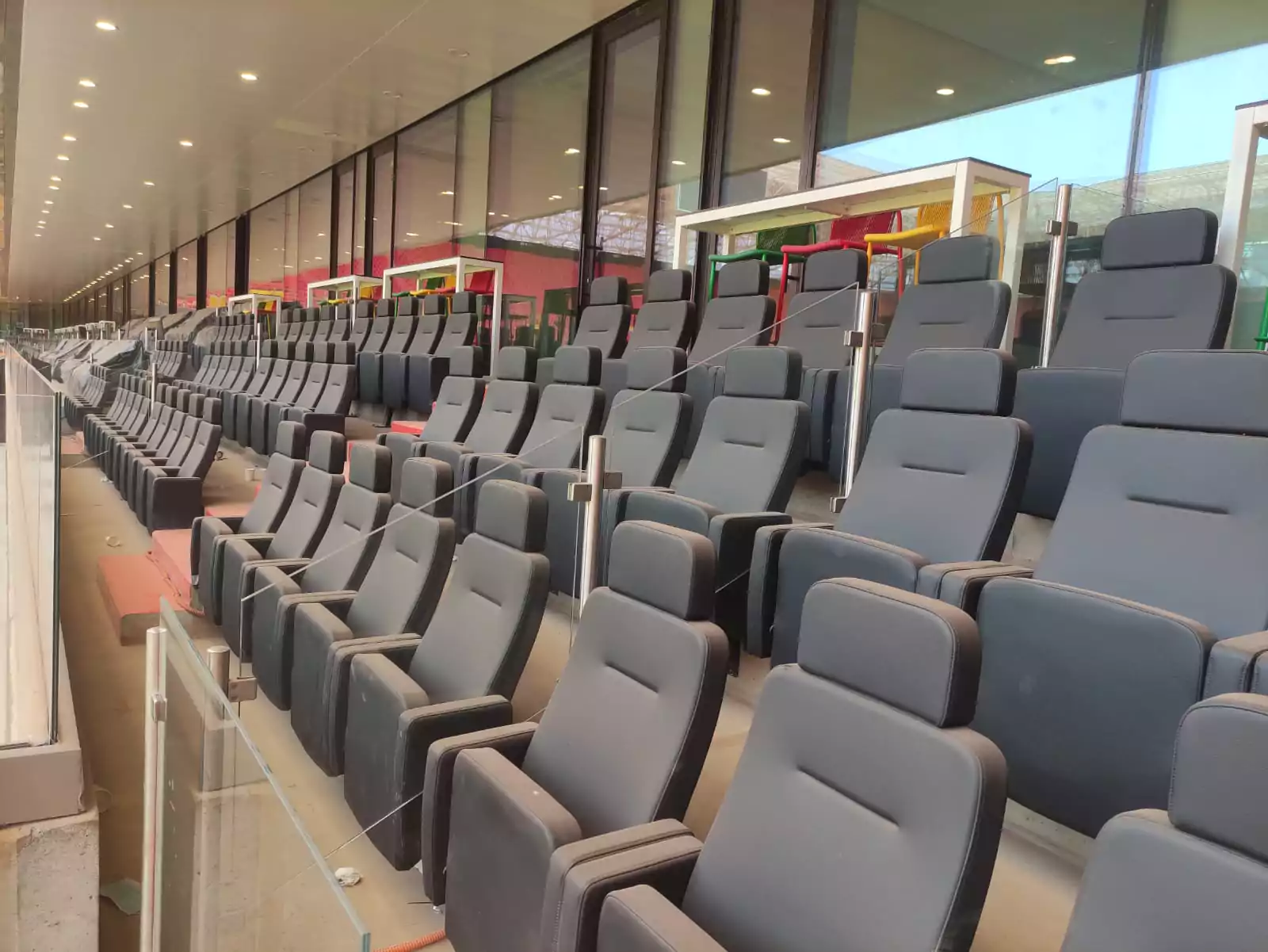
Premium areas need a different seating language. VIP stands, protocol zones, hospitality sections and executive areas should offer more comfort, more personal space and a more refined appearance than general seating areas.
VIP stadium seating may include armrests, upholstery, cup holders, padded backs, wider dimensions and special finishes. However, premium seating must still respect stadium conditions. If the area is open to weather, material suitability becomes critical. If the area is covered, more refined upholstery options may be possible.
A stadium seating manufacturer should help separate general seating logic from premium seating logic while keeping the overall venue visually coherent.
Press and Media Areas
Press seating is not ordinary spectator seating. Journalists and media teams need a working position. The seat must coordinate with desks, laptop use, power access, sightlines and long event durations.
A manufacturer involved in stadium seating should understand that press tribunes require functional planning. Seat height, desk distance, legroom and alignment affect usability. These areas may be smaller in quantity, but they are highly visible in professional events.
Well-planned press seating supports the operational quality of the stadium.
Player Bench and Team Zones
The player bench area is another part of stadium seating manufacturing. It is visible during broadcasts, photos and live events. It should look professional while offering comfort and protection for substitutes and technical staff.
Player bench seating may include headrests, upholstery, club colors, branding details and shelter integration. The system should allow quick access to the field and protect users from weather where needed.
A complete stadium seating manufacturer should be able to support not only spectator stands but also team areas, shelters and related seating zones.
Color Planning in Manufacturing
Color is a manufacturing decision as much as a design decision. Stadium colors must be consistent across production batches, suitable for outdoor use and planned according to the venue’s identity.
Club colors, national colors, sponsor zones, patterns and block divisions can all be created through seating. But the manufacturer must support this with stable color production and careful project coordination. Replacement planning is also important. If additional seats are needed later, color consistency should remain manageable.
A strong color plan gives the stadium identity. Strong manufacturing keeps that identity alive.
Numbering and Seat Identification
Seat numbering is essential for ticketed stadiums. It helps spectators find their places, supports digital ticketing and reduces confusion during high-traffic entry periods.
A manufacturer can support numbering through seat plates, molded areas, armrest positions or other model-specific solutions. The numbering method should be durable, readable and suitable for cleaning.
Numbering should not be treated as an afterthought. It is part of how the stadium operates.
Renovation Projects Need Special Attention
Renovation projects are often more complex than new builds. The existing concrete may be uneven. Old mounting holes may not match new products. Step depth may be limited. Capacity may change when old seating is replaced.
A stadium seating manufacturer should approach renovations with technical caution. Measurements, photos, drawings and sample installation checks can help avoid mistakes. The goal is to improve the venue without creating unnecessary construction work.
In many renovation projects, the right seating choice can modernize the stadium quickly while protecting existing infrastructure.
New Stadium Projects and Early Coordination
New stadium projects offer the advantage of planning seating from the beginning. This allows better coordination between tribune geometry, capacity, sightlines, VIP zones, press areas, accessible seating and emergency circulation.
If seating is selected too late, the architecture may not support the preferred model. Early coordination helps protect both comfort and capacity.
In new projects, the stadium seating manufacturer should be part of the technical discussion before final decisions are locked.
European Project Requirements
European stadium projects often require reliable communication, consistent production quality, technical clarity and practical logistics. Whether the project is a club stadium, municipal venue, school sports facility or arena, long-term serviceability is important.
Monseat’s European positioning can support stadium seating projects with practical communication, project flexibility and manufacturer-based supply. For projects across Europe and nearby regions, regional production and coordination can make planning easier.
The value of a manufacturer is not only in the product. It is also in how clearly the project can be managed.
Lifecycle Value Instead of Unit Price
Unit price is important, but it should not be the only decision factor. In stadium projects, thousands of seats may be installed. If the product fades quickly, loosens, cracks or becomes difficult to maintain, the total cost increases.
Lifecycle value includes durability, cleaning efficiency, replacement planning, mounting stability, color performance and user comfort. A seat that performs longer protects both budget and venue image.
The right manufacturer helps project teams understand the difference between cheap supply and long-term value.
Quality Control and Consistency
Large seating projects require consistency. Every seat should match in color, form, strength and finish. This is where manufacturing control becomes important.
Quality control should cover raw materials, production process, surface finish, mounting points, mechanism function, color consistency and packing. If the project includes different seat categories, each category should still meet the same general standard of reliability.
A stadium seating manufacturer should be able to produce at scale without losing control of details.
Packaging, Delivery and Installation Support
Stadium seating does not end at production. Packing, delivery coordination and installation support also affect the project. Seats should arrive protected, organized and ready for efficient installation.
For international projects, logistics planning becomes especially important. Product grouping, labeling, packing method and delivery timing can reduce site confusion. If installation is phased, organization matters even more.
Good manufacturing includes thinking about what happens after the factory.
Stadium Seating Categories
A complete stadium seating manufacturer may support many categories: fixed stadium seats, monoblock seats, folding stadium seats, tip-up seats, UV-resistant plastic seats, VIP stadium seats, hospitality seats, press tribune seats, player bench seats, dugout seating, shelter systems, arena seating and retractable tribune seating.
Each category has a different role. The right selection depends on venue type, climate, capacity target, comfort expectation, maintenance routine, budget and long-term project strategy.
Conclusion
Choosing a stadium seating manufacturer is a strategic decision. The manufacturer affects product quality, seating consistency, customization, project coordination, installation readiness and long-term venue value. A stadium seat must be durable, practical, visually consistent and suitable for the real conditions of the stand.
A successful stadium seating project requires more than selecting a model. It requires understanding the tribune, planning the seating bowl, choosing the right materials, coordinating colors and numbering, protecting sightlines, supporting maintenance and balancing quality with price.
Professional stadium seating manufacturing helps a venue remain organized, comfortable and visually strong for years of real use.
For professional stadium seating manufacturing solutions, visit the official website.
Created By : Monseat